
When we inspect houses where an amateur has been doing electrical work, there’s a good chance we’ll find outlets with reversed polarity. This happens when the hot and neutral wires get flipped around at an outlet, or upstream from an outlet. Reversed polarity creates a potential shock hazard, but it’s usually an easy repair. Any outlet tester will alert you to this condition, assuming you have a properly grounded three-prong outlet. If you have a three-prong outlet that is not grounded, however, your electrical tester won’t be able to tell you if the polarity is correct or not.
A brief definition of Hot and Neutral wires: On a standard outlet, technically called a duplex receptacle, there are two wires that carry electricity. One of these wires is connected to the earth, or grounded, so this wire is called the grounded conductor. This wire is commonly referred to as the neutral wire, and it should always be white. That’s what the larger slot on your outlet is for.
The other wire doesn’t get connected to the earth, and it’s called the ungrounded conductor, or hot wire. This wire can be any color besides white or green, but it’s usually black or red. That’s what the smaller slot on your outlet is for. Because the hot wire completes a circuit by coming in contact with the earth, if you touch a hot wire and you’re in contact with the earth (which is pretty much always), you’ll become part of the circuit. In other words, you’ll get shocked.
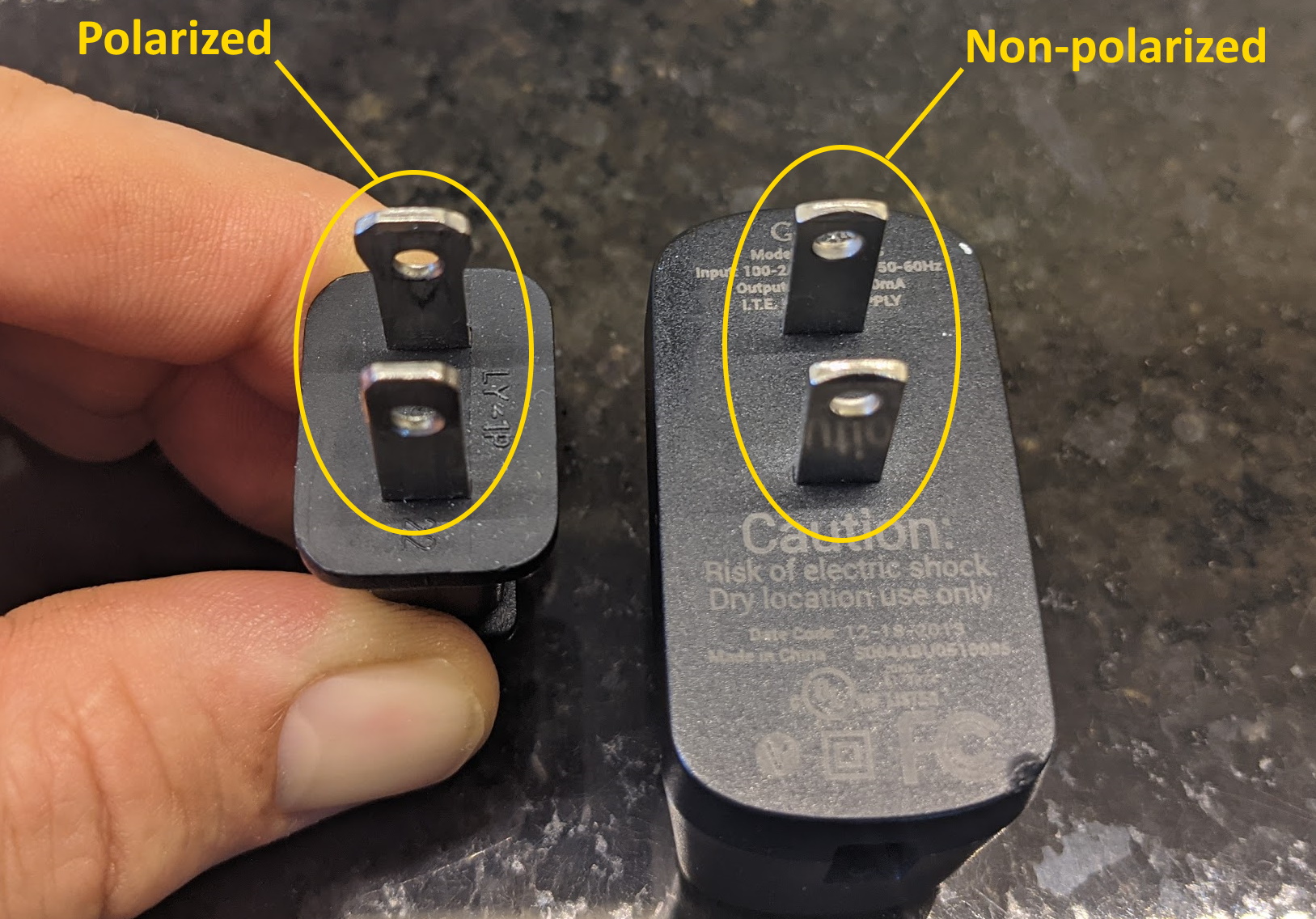
To help make electrical devices safer, some plugs are polarized. This means that one blade is larger than the other, and the larger blade will only fit into the neutral side of an outlet.
Shock hazard scenario #1: I’m toasting an English muffin and it gets stuck in my toaster. I look in the toaster and see that the heating elements are off, so I assume it’s safe to stick a knife in the toaster to get my muffin. I should be safe doing this because the switch that controls the flow of electricity to the heating elements in the toaster shuts off the hot wire. Unfortunately, my toaster is plugged into an outlet with reversed polarity, so the switch on my toaster is shutting off the neutral wire instead of the hot. This means there is always electricity at the heating elements. As soon as some dope sticks a knife into the toaster, electricity will travel up the knife, through my body, and back to the earth. Breakfast ruined. Your mom was right when she told you to never do this, even if the toaster is off.

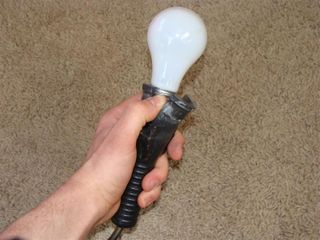
Shock hazard scenario #2: I’m using an old trouble light, and my finger accidentally comes in contact with the outside of the metal socket that holds the light bulb in place. The socket is always connected to the neutral wire, so no big deal… unless the light is plugged into an outlet with reversed polarity. In this case, I’ll get a shock. If this happens while I’m laying on the garage floor working on my car, there’s a good chance that I’d be electrocuted. This can also happen with old table lamps that have exposed metal sockets.
How to fix: Get an electrician. I want to say that the fix is as simple a swapping the wires at the outlet, but that’s not always the case. If the wiring appears to be correct, then the wiring error happened somewhere upstream from the outlet. Now the electrician needs to trace down the wires to figure out exactly where things went wrong and fix it there. Simply swapping the wires at the outlet would not be an acceptable fix.
The bottom line is that reversed polarity at outlets is a shock hazard, but electronic equipment plugged into an outlet with reversed polarity will still function. Don’t assume that your outlet is wired properly just because it “works”. You can test for reversed polarity at your outlets with an inexpensive outlet tester you’ll find at any home improvement store.
And if you have outlets with reversed polarity, have the wiring repaired by an electrician.