Reuben's Home Inspection Blog

Why Test For Radon?

April 5th, 2011 | No comments

If you’re buying a home in Minnesota, get it tested for radon.  There are two reasons I give for having radon tested; lung cancer and money.

A few quick facts about radon

  • Radon is a gas formed by the breakdown of uranium and radium, both of which are found in high levels in Minnesota.
  • Every home is susceptible to radon, even new construction.
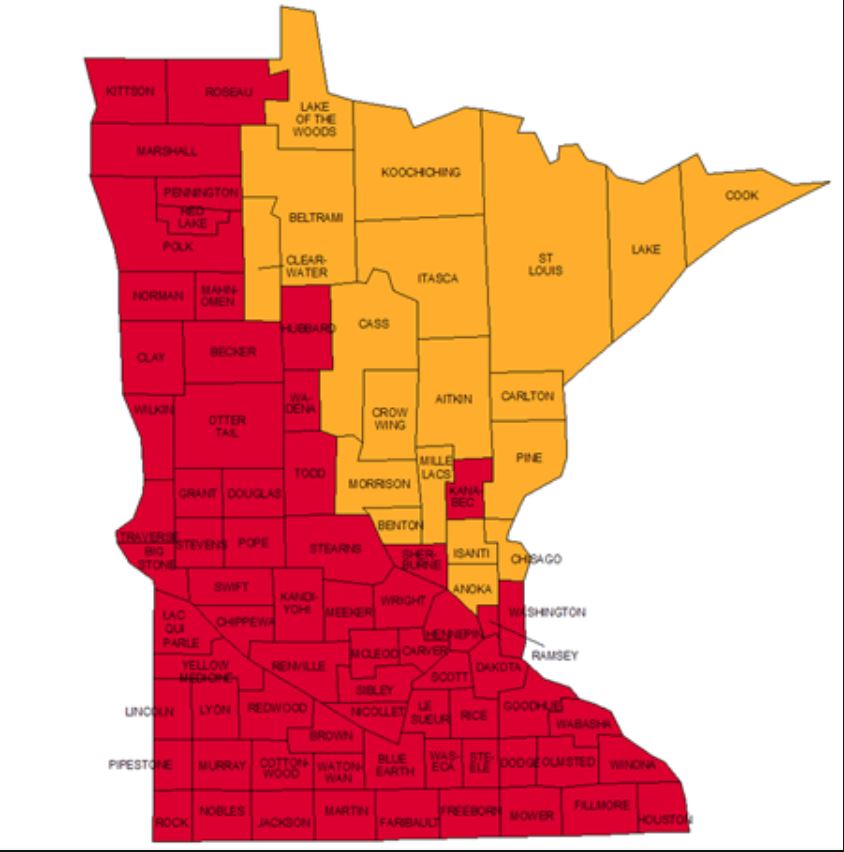
  • There are a large number of homes in Minnesota with high radon levels.  We’ve found that about one out of three houses have high levels of radon.
  • Radon is unpredictable.  Two houses built right next to each other, at the same time, with the same construction methods, may have very different radon levels.

Lung Cancer

Radon gas is the number one cause of lung cancer among non-smokers, and the second leading cause of cancer in America.  Radon testing is recommended by the EPA, the Surgeon General, the American Lung Association, and the Minnesota Department of Health.  The area most at risk in a home is the lowest level that gets lived in.

Money

When we conduct a radon test and the test results come up high, the buyer typically asks the seller to pay for or install a radon mitigation system.  These systems are extremely effective at lowering radon levels, and they cost about $1500 on average.    If you buy a home and you decide not to test for radon as part of the home purchase, you can still test for radon after you own the home, but if a radon mitigation system needs to be installed, you won’t have the luxury of asking someone else to pay for it.  Well, I suppose you could always ask…

Picture this scenario: you buy a home, but don’t have it tested for radon.  Several years down the road, you sell your house.  The new buyers have a radon test performed, the radon test comes up high, so the buyers ask you to install or pay for a mitigation system.   You’ll probably wonder why you never tested for radon when you bought the house.  This happens a lot.

Objections to radon testing

We hear many objections to radon testing – some are valid, some aren’t.

The home doesn’t have a basement. Ok, that’s a good objection.  We’ve found that most homes without basements have very low levels of radon.  Basements with a walkout generally have lower levels, but we’ve still found our share of high radon tests at basements with walkouts.

It’s new construction. Minnesota requires a passive radon mitigation system installed in every new house; this doesn’t mean radon will be eliminated, it just means the chances for elevated radon levels will be reduced.

The home already has a mitigation system. If the system is working properly, the radon levels are probably very low.  We’ve never found high radon levels in a home with a working mitigation system.

I’m buying a bank owned property or short sale, so it doesn’t matter if the house has high radon levels.  The sellers won’t be paying to fix it, and I’ll still want the house either way. Fair enough.  It’s still a good idea to get a do-it-yourself test after you own the house though.

I’m going to do my own test. That’s fine, but it won’t be part of the real estate transaction.

Radon is a conspiracy of the government.  Oh boy.  I’ve heard this before, and I’m not going to get in to that discussion… but just for the sake of argument, let’s pretend radon is a conspiracy.  Who cares?  Even if radon was only a percieved health problem, it would still be a liability.

Reuben Saltzman, Structure Tech Home Inspections - EmailRadon Testing in Minnesota

Facebook Reuben's LinkedIn Page Follow StructureTech on Twitter ASHI Certified Home Inspector - Click To Verify Click to subscibe to Reuben's Blog

Could My Radon Monitor Be Broken?

October 19th, 2010 | 2 comments

One of the more awkward conversations that I had with a home seller this year dealt with a high radon test at his home in Minnesota.  We performed a radon test for the buyer, and the test came up high (over 4.0 pCi/L), so the buyer asked the seller to install a radon mitigation system.  The seller wasn’t happy about this, so he called us up to complain.

We had performed a radon test for the seller when he bought the home four years ago, and the test was below 4.0 pCi/L.

I could understand the seller’s frustration; I would have been frustrated too.  How could this be?  Was our electronic radon monitor broken?  No, it really just came down to timing.  Radon levels constantly fluctuate throughout the day, and even throughout the year.  There are many factors that affect radon test results – so many that you’ll never get the exact same results twice.  A few of the larger factors include:

  • Where the test was placed in the home.
  • Barometric pressure.  Rainy weather = lower pressure = higher radon levels
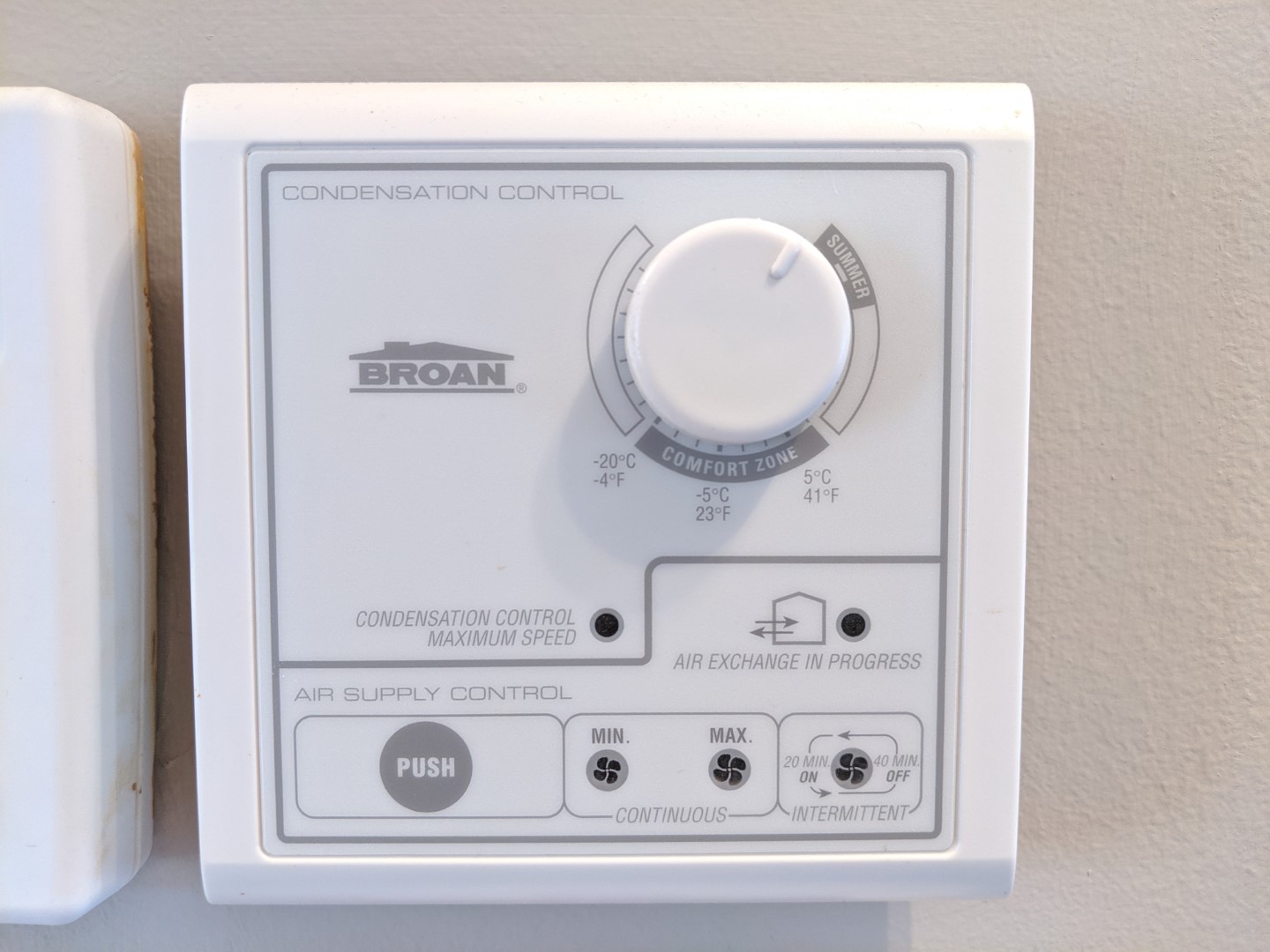
  • Ventilation systems.  An HRV running at full speed can cut radon levels in half.
  • Windows open vs closed.  Houses always act like chimneys; warm air rises.  This creates negative pressure in the basement and positive pressure at the upper levels.  When windows are open at the upper levels, the house will act even more like a chimney, which increases radon levels.  That’s right; opening windows on the upper levels can actually increase radon levels in the basement, which is where the test is placed.

With all of these factors, why even bother with a short term radon test? Because it helps to decide whether or not radon is a problem that needs to be dealt with.   The overall seasonal average typically won’t be too far off from the short term test.

I performed a radon test at my own house for 96 hours, and as you can see from the graph below, the levels didn’t vary all that much.  The overall average came out to 2.6 pCi/L.  If you were to only look at the highest levels in a 48 hour period for this test, the average would still only be 2.9 pCi/L.  I’ve performed many tests at my house throughout the year, and the average is consistently between 1 and 3.

Reuben's radon

For the record, we have every one of our electronic radon monitors calibrated annually.  While radon levels may be volatile, the accuracy of our tests isn’t.

Reuben Saltzman, Structure Tech Home Inspections - EmailMinneapolis Home Inspections

Facebook Reuben's LinkedIn Page Follow StructureTech on Twitter ASHI Certified Home Inspector - Click To Verify Click to subscibe to Reuben's Blog

Six Things To Consider Before Testing For Radon On The Home You’re Buying

October 5th, 2010 | No comments

If you’re buying a house in Minnesota and you want to have it tested for radon as part of your inspection contingency, here’s a list of six items that the EPA says you should consider before you have the test conducted.

Where the radon test will be located

The radon test should be placed in the lowest level of the home that could be used regularly, whether it’s finished or not.   I’ve said before that radon tests should never be placed in crawl spaces, but what if the basement ceiling height is 6′ 11″ ?  The Minnesota State Building Code defines a crawl space as “Areas or rooms with less than 7 feet ceiling height measured to the finished floor or grade below.” (MN Rules 1309.0202)    This is a grey area that should be discussed ahead of time.

Who should conduct the radon test

Smiley-winky-face Call Structure Tech, duh!  We’ve been testing radon in Minnesota for more than twenty years.

What type of radon test to do

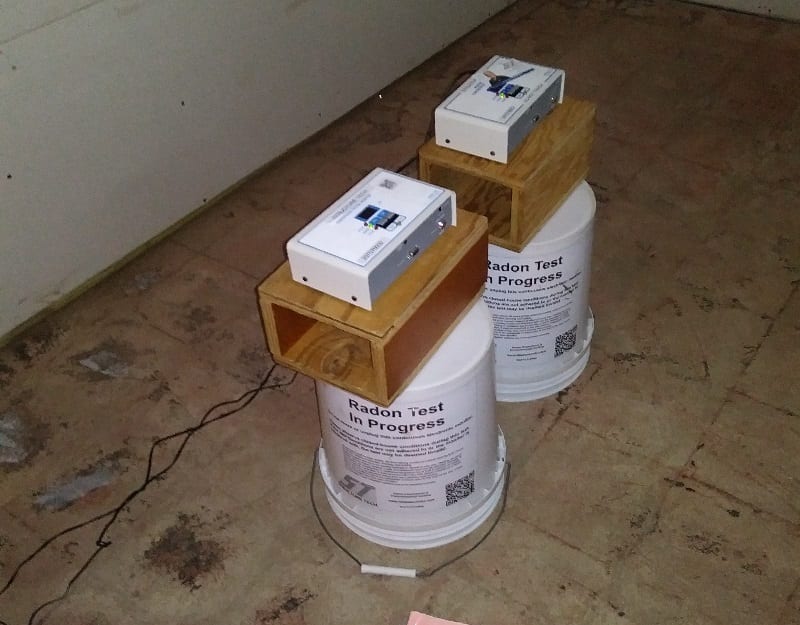
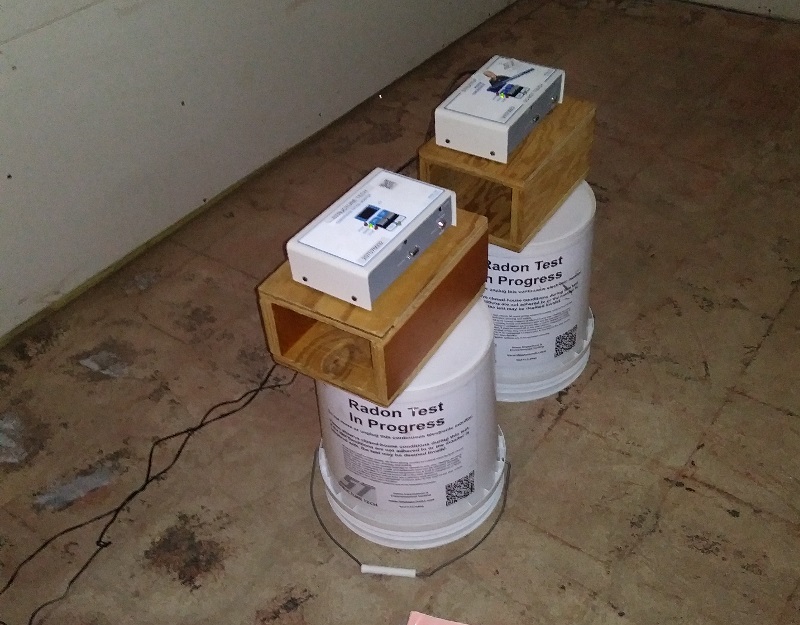
A radon test performed with a continuous electronic monitor can be completed in as little as 48 hours.  The other type of test that is most commonly used for a real estate transaction is a charcoal canister test.  This type of test must remain in the home for minimum of 72 hours, and then the canisters must be sent to a lab for analysis.  Do you have time to get the testing completed?

When to do the radon test

The occupant of the home must maintain closed house conditions for 12 hours prior to, and throughout the duration of the radon test.  This means keeping windows and doors closed, except for normal traffic.  A few things that make this difficult would be if the seller is moving, if the home is under construction, if it’s new construction, or it’s a hot week in August and the home doesn’t have air conditioning.  Stuff to think about…

How the seller and the buyer will share the radon test results and test costs

The issue over the test costs is a no-brainer; if the buyer wants a test, they should pay for it.  If the seller doesn’t want to know about the test results, they should make that clear ahead of time.  Whywouldn’t the seller want to know?  If the test is high, this must now be disclosed to any future buyers if the deal falls apart for any reason.

When radon mitigation measures will be taken, and who will pay for them.

This is the big one.  Ideally this would be decided ahead of time, but I’ve never heard of this actually happening.  If the radon test comes up high, most home buyers will ask the seller to install a mitigation system, but will the seller be willing to do this?

While I’m certainly an advocate of radon testing, one of the few times that I don’t recommend testing for radon at the time of a home purchase is when the results aren’t going to make any difference. In other words, if the buyer has decided to purchase a home regardless of the radon levels and the seller is unwilling to mitigate high levels of radon, there’s no point in having a professional test performed ahead of time.  The buyers would be just as well off performing a long-term test on their own after they purchase the house.

Reuben Saltzman, Structure Tech Home Inspections - EmailMinneapolis Home Inspections

Facebook Reuben's LinkedIn Page Follow StructureTech on Twitter ASHI Certified Home Inspector - Click To Verify Click to subscibe to Reuben's Blog

This Radon Test Is Useless

September 8th, 2009 | 3 comments


While doing a Truth-In-Sale of Housing re-inspection today, I noticed a radon monitor present in the crawl space.  This home didn’t have a basement, just a trap door that led to a 5′ x 5′ crawl space with a water heater, water meter, and gas meter.

Trap DoorRadon Monitor In Crawl Space

My first thought:

Huh, someone is doing a radon test.  Great!  Must have sold the house.

My next thought:

What the heck is that test doing in a crawl space?

Radon will enter a home through the basement or crawl space floors and walls, so the lower areas in a house will always have the highest concentrations of radon.  This particular home had an uncovered crawl space, which is typically a good indicator that the radon test will come out high.


In this particular case, the radon test was completely useless.


The EPA protocol for radon testing during a real estate transaction requires the test to be placed in the lowest level of the home that could be used regularly.  In other words, where someone might actually spend some time.


A crawl space is the place in the home where someone would be least likely to use regularly, if at all.  If someone regularly spends time in their crawl space,  they have bigger problems than radon to worry about.   Even if the radon level for this particular test is very high, the numbers are meaningless.  The test needs to be done in the living area to be of any use.


Another requirement for radon tests is that the seller maintain closed-house conditions for 12 hours prior to the test and throughout the duration of the test, which means keeping the windows and doors closed, except for normal traffic.  When I arrived at this house, most of the windows were wide open, and the owner didn’t have any idea that his windows were supposed to be closed.  The owner should have been notified about the radon test a day ahead of time, and the inspector should have left a form at the house for the owner to fill out, stating that the EPA protocols for testing would be adhered to.


There is no licensing requirement for radon testing in Minnesota, but seeing a test performed like this makes me think there should be.

Reuben Saltzman, Structure Tech Home Inspections – EmailDetailed Home Inspection Reports

Radon Resistant Construction Is Now Required In Minnesota

April 21st, 2009 | 5 comments

It’s estimated that one out of three homes in Minnesota has elevated levels of radon gas.  Because of these high numbers, the Minnesota State Building Code has adopted Apendix F of the International Residential Code, Radon Control Methods.  This means that all new homes in Minnesota must now be built with a passive radon control system.  A passive radon control system is similar to a standard radon mitigation system, but there are a few key differences.

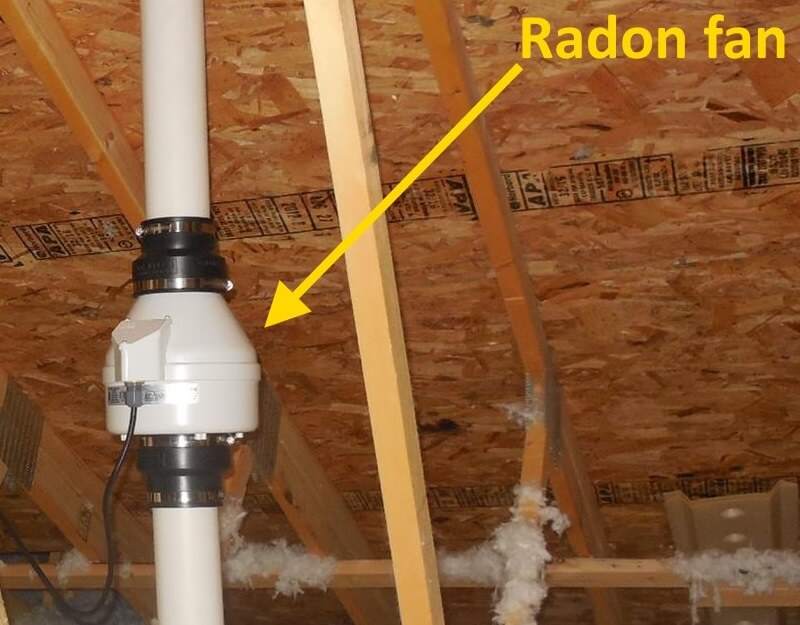
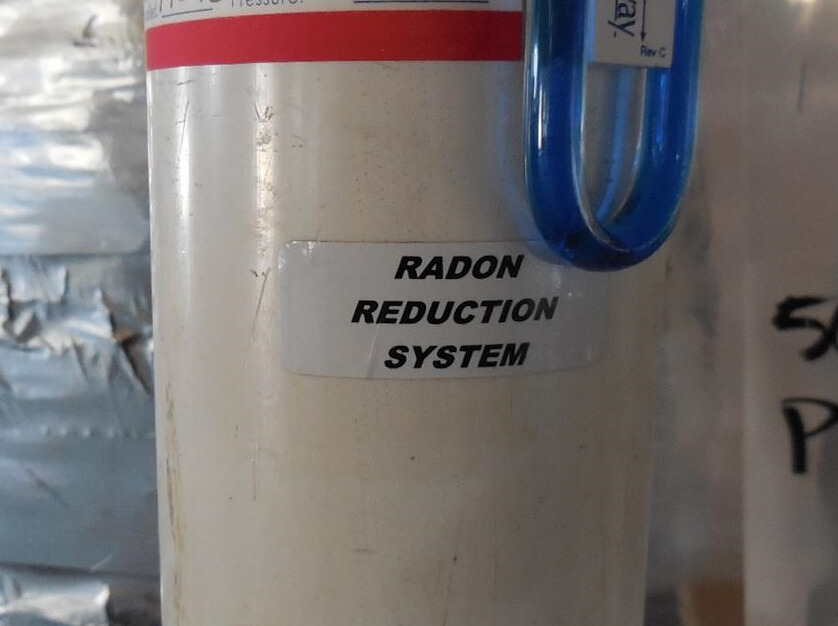
A standard radon mitigation system consists of a 3″ plastic vent pipe that starts under the slab in a basement and ends above the roof, much like a plumbing vent.  A fan is connected to this pipe, usually in the attic, so the air and gases under the slab are constantly pulled out, creating a negative pressure zone in the area under the basement slab.  This prevents most radon from entering in to the home.  If drain tile is present, the pipe can be tied in to the drain tile, as this creates a perfect way to suck air soil gases from under the entire slab.  Gaps in the slab are also sealed to help prevent radon entry.

Passive Radon System A passive radon control system consists of the same 3″ plastic pipe, but without a fan.  An electrical junction box will need to be wired in to the attic near the pipe so a fan can be easily added later, if needed. A  layer of 4″ aggregate, sand, or soil gas collection mats must be installed under the basement slab, and 6 mil polyethelene laid over the aggregate before the basement slab is poured.  This allows soil gases to be properly pulled from everywhere under the slab, and keeps soils gas from entering in to the home if the basement slab cracks.  Any openings in the basement floor must also be sealed, such as sump baskets and bathtub drains.

There are many benefits to building a home with a passive radon control system.  The most obvious is that it reduces the risk of lung cancer.   Passive systems don’t require the use of a fan, so there is no electricity being constantly consumed – it’s a ‘green’ thing.   These systems are also much more cosmetically appealing, as most of the components will be concealed in finished spaces.  Radon_mitigation_system The photo at left shows a radon mitigation system that was installed on an old home – the fan and the vent pipe are clearly visible from outside the house.  Another benefit to passive systems is that they will help control moisture in the basement.  Openings in the basement floor now need to be sealed, which will help prevent moisture migrating from under the slab to the rest of the basement, and eventually the rest of the house.

For more information on passive radon control systems in Minnesota, visit the Minnesota Department of Health.


Reuben Saltzman, Structure Tech Home Inspections – EmailHome Inspections Minneapolis

RELATED POST: