Reuben's Home Inspection Blog

How to prevent ice dams from the exterior

March 4th, 2013 | 1 comment

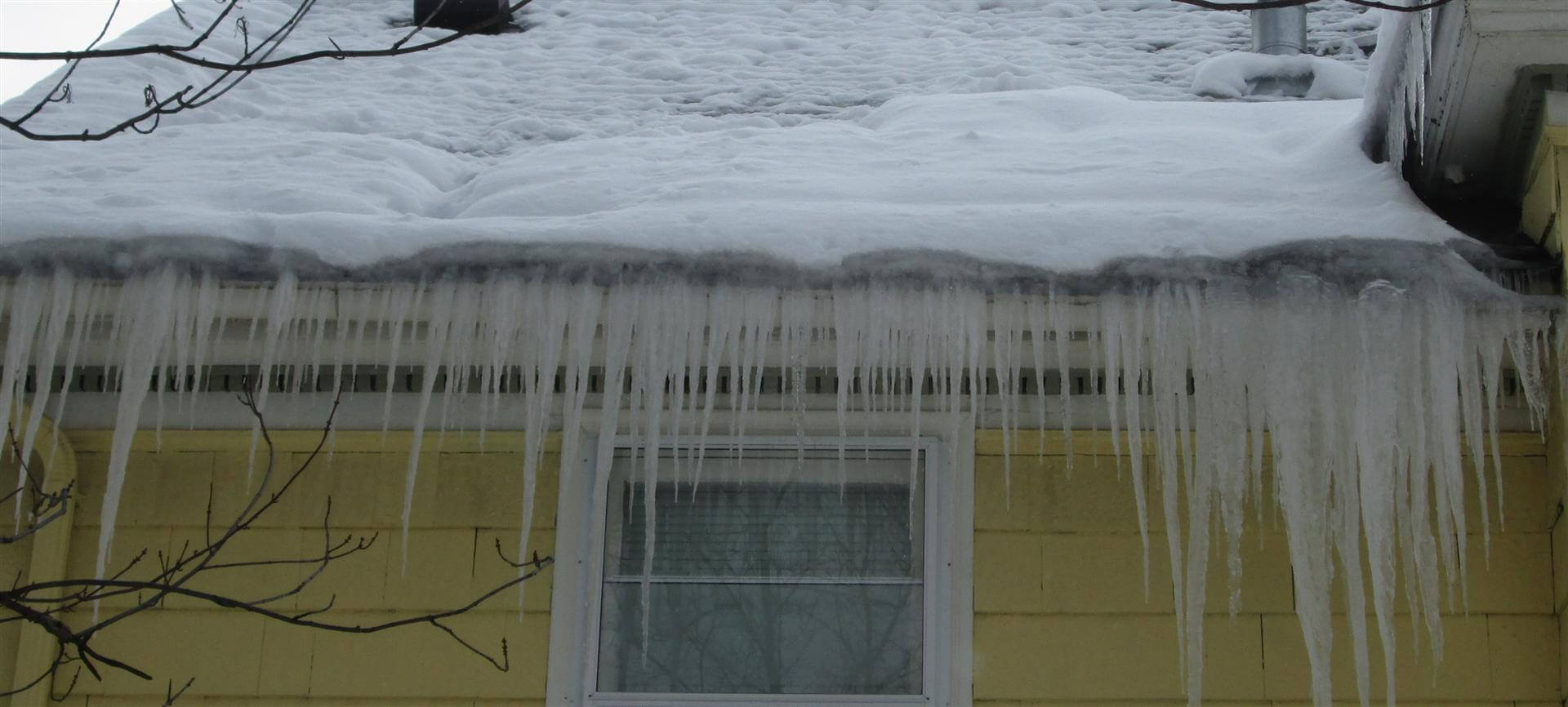
I’ve written about how to prevent ice dams by fixing attic air leaks and insulation, as well as several hack methods showing how to remove ice dams, but I still get a lot of questions about ice dam prevention.  For homeowners with a one-and-one-half story house or a house with a vaulted ceiling and no true attic space, correcting attic air leaks and insulation can be an extremely expensive project.

In these cases, it’s not always cost effective to fix the problems that are causing the ice dams – the ‘repairs’ might outweigh the costs of controlling the ice dams, and even if the repairs make economic sense, it’s not always in the homeowner’s budget.  In those cases, I recommend ice dam control from the exterior.

Remove The Snow

Roof RakePulling snow off the roof with a roof rake will keep ice dams to a minimum. This becomes a constant chore, but it’s better than dealing with water leaking in to the house.  Just raking the first several feet of snow from the eaves is typically enough to prevent the formation of ice dams, but in some cases, this will cause ice dams to form higher up on the roof.  The trick is to get the shingles exposed to the sun; once that happens, the sun will warm the shingles enough to prevent ice from accumulating.

Raking snow off the roof with a roof rake is a safe way of removing snow, as long as you don’t get too close to your overhead power lines.  In theory, a roof rake could cause some premature wearing of shingles by removing the aggregate, but I’ve never seen any real life evidence of this.  Some roof rakes have little wheels at the bottom that prevent the rake head from actually rubbing on the shingles.

Roof Rake

While the roof rake pictured above is the most common type, there are many other variations of this designed to make the work easier – one such version is the MinnSnowta Roof Razor®.

Removing snow from the eaves is an effective way to prevent ice dams, but it won’t work 100% of the time.  Two years ago, I inspected several houses with ice dams forming right where the snow stopped being removed.  This is not typical, but it can happen during especially cold, snowy winters. When this happens, people start to get depressed and wonder why they live in Minnesota.

Second Ice Dam

The fix for this is to have all of the snow removed.

For two-story homes where using a roof rake from the ground isn’t practical or possible, the options are to risk your life getting up on an icy roof to shovel the snow off, hire someone else to risk their life, or install roof de-icing cables as a preventative measure.

Shoveling snow off roof

De-Icing Cables

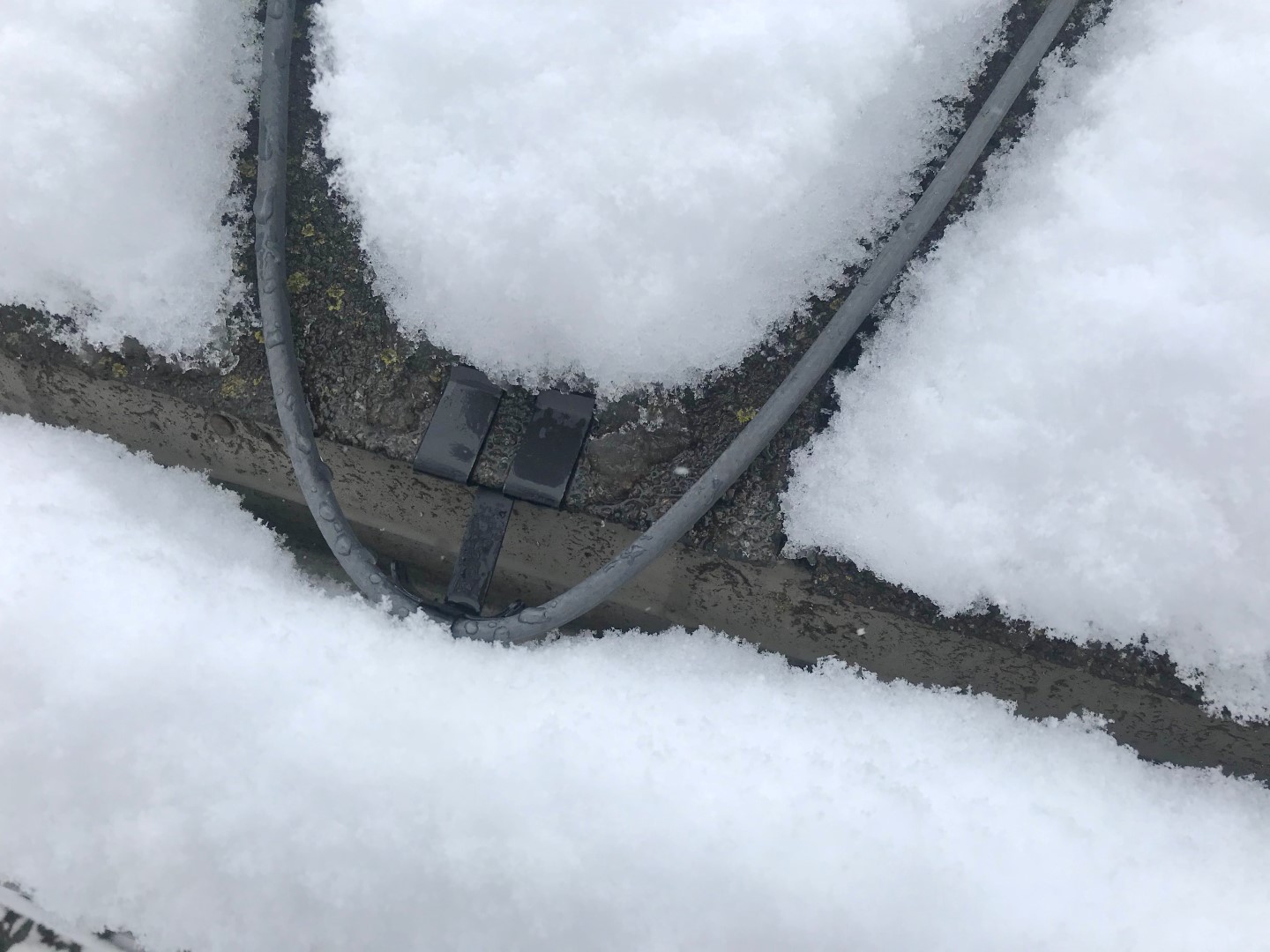
Roof de-icing cables, also known as heat cables or heat tape, should be considered a last resort when it comes to preventing roof leaks from ice dams.  De-icing cables themselves aren’t cheap, it costs money to have them professionally installed, and they’ll cost money to operate – between five and eight watts per foot.  I’ve also heard that they can damage shingles, but I’ve never seen any evidence of this.

Roof De-Icing Cables

On the flip side, de-icing cables are very effective.  When de-icing cables are properly installed and operational, ice dams won’t cause leakage.   De-icing cables won’t prevent the formation of ice at the eaves, but they’ll keep enough ice melted to create drainage channels for water.

If you choose to install roof de-icing cables yourself, here are a few tips:

  • Measure the areas where you need to install your de-icing cables first, and buy appropriately sized cables.  For a simple 15′ section of roof with no overhang, a gutter, and one downspout with an extension, you will need a 60′ heating cable.
  • The cables should extend 6″ up the roof past the exterior wall line, through the gutters and downspouts, and 2/3 of the way up the valleys.
  • Don’t bother removing the snow from your roof; you could damage your cables, and you could potentially create another ice dam higher up on the roof, defeating the purpose of the heating cables.
  • Don’t expect the snow and ice to melt the way it does in the promotional photo above.  It’s like comparing a photo of a fast-food burger to the burger that actually comes in the fast-food bag.

If fixing the causes of ice dams isn’t a possibility and safe removal of snow isn’t possible, de-icing cables or de-icing panels may be a good choice.  Sometimes this is the most cost-effective way to prevent roof leakage from ice dams.

Author: Reuben Saltzman, Structure Tech Home Inspections  Google Profile


How To Remove Ice Dams

February 12th, 2013 | 10 comments

With the recent snow storm we received in Minnesota and the crazy snow storm that dumped several feet of snow on the east coast, there will be plenty of people dealing with leaking roofs from ice dams.  I have already blogged about how to prevent ice dams from happening, but I get far more inquiries about how to remove ice dams.   There are plenty of ‘hack’ methods of removing ice dams, so I decided to discuss them.  The methods I’m going to discuss involve an axe, ice pick, pantyhose, salt, heat cables, a pressure washer, and even a blowtorch… just for fun.

Let me repeat – these are all hack methods.  I don’t advise any of these methods, but when people have water leaking in to their home, these DIY methods are what people turn to.  Hopefully I can talk people out of doing most of these.  The most effective and safe way to remove an ice dam is to hire a professional ice dam removal company that will use steam.

Axe

The most obvious way to get rid of ice dams is to take a blunt instrument and hack away at the ice dams.  I tried an axe.

Axe

Pros: Fast results.  I hacked through several feet of six-inch thick ice dams in a matter of minutes.

Cons: Unsafe, cumbersome, and you’ll wreak your roof.   I had to set up a ladder on the icy ground and swing an axe while standing on a ladder.  The ice also really flew in my face – I should have been wearing goggles.  I was only able to remove the ice down to the gutter, and only able to get close to the surface of the roof without risking damage to the shingles.  I’ve inspected dozens of roofs where someone got crazy with an axe at the eaves.  It’s a great way to ruin your roof.

Verdict: This is a high risk, yet fast and effective way of getting rid of a lot of ice, but leaves the job incomplete.  You’ll probably damage your roof doing this, and you might hurt yourself too.

Ice Pick

This sounds like a natural choice, doesn’t it?  I actually used my awl, but close enough.  I gave it my all.  <insert crickets chirping>

Reuben's Awl

Pros: Very fast results, very little effort.  It’s as though this tool was made for picking at ice.  Oh, wait…  Still, I was genuinely surprised at how fast and accurate this method was.

Cons: Unsafe.  Again, I was jabbing at ice dams while standing on a ladder, which was sitting on the icy ground.  I also had to be very careful to not damage the roof.

Verdict:  This worked quite well… but again, you’ll probably poke a bunch of holes in your roof doing this.

Roof Tablets

Yes, this is a product designed specifically for preventing damage from ice dams.  Contrary to the name on the container, the product doesn’t actually melt your roof (whew).  The instructions say to toss the tablets on to your roof and they’ll melt through the ice dams, allowing for “water to drain safely”.

Roof Melt Tablet Container

Roof Melt Tablet Instructions

Roof Melt Tablets

I tried tossing the tablets on the roof like the instructions said to do, but it didn’t work out very well.  I consider my tablet tossing skills to be well above average, but I still couldn’t get the tablets to end up in a good location – they all just slid together in one place.  If I didn’t get a ladder out to take pictures, I never would have known that the tablets didn’t end up in a good spot.

Roof Melt Tablets Tossed

Just to give the roof melt tablets the best possible chance for success, I hand-placed them on the ice dam and I used about four times as much as the directions called for.  The instructions said to put them higher up on the roof, but I wanted to make some holes in this ice dam.

Roof Melt Tablets Placed Day 1

By day two, I had some pretty dramatic results – the tablets had melted all the way through the ice dam.  By the way, for anyone in a southern climate that might be reading this blog, that white stuff on the ice is snow, from a very light snowfall the night before.

Roof Melt Tablets Day 2

By the third day, not much change.  There were definite holes in the ice dam, and some channels had formed for water to drain through, but the majority of the ice was still there.

Roof Melt Tablets Day 3 #2 Roof Melt Tablets Day 3 #1

Pros: If you had perfect aim and tablets didn’t move after you tossed them on to the roof, this would be very safe.  Some channels were created for water to drain through, which might be enough to prevent leakage at your roof.

Cons: The tablets don’t stay where they land, which negates the whole safety thing.  I still had to set up a ladder on the icy ground and move the tablets around myself.  This method was also pretty ineffective – it created a bunch of holes in the ice dam, but so what?  Most of the ice dam was still there in the end.

Verdict: This might be a nice way to get down to the roof surface, and it might prevent leakage from ice dams if enough channels are created for water to drain through, but you’re still left with a huge ice dam.

Salt Filled Pantyhose 

Take off your pantyhose, fill ‘em up with calcium chloride or something similar, and toss ‘em on your roof perpendicular to the ice dams.  The idea is that the salt will leak through the pantyhose and create channels for the water to drain through, preventing water from leaking in to your house.

I filled one pantyhose leg with “Ice Melt”, which contained a blend of calcium chloride and rock salt.  I filled another with an ice melting salt that didn’t have the contents labeled – I suspect it was just rock salt.  I also poured the Ice Melt in a perpendicular line along the ice dam, using far less salt than I used in either of the pantyhose.  I did this just to compare the results.

10:00 AM (Start Time)

Salt Filled Pantyhose 10am Salt On Roof 10am

2:00 PM

Salt Filled Pantyhose 2pm Salt On Roof 2pm

4:00 PM

Salt Filled Pantyhose 4pm Salt On Roof 4pm

The pantyhose were a bit of a bust for me.  With salt alone being so effective, why bother with the pantyhose?  I’ve heard several opinions on this:

  • The pantyhose will contain the salt and prevent runoff.  The idea is apparently to leave the pantyhose there all winter.
  • The pantyhose can be ‘flung’ on to the roof with a rope – no need for a ladder.  After the work is done, you pull the pantyhose back down.
  • The pantyhose will gradually release the salt.
  • The pantyhose method works much faster if you start by pouring water on the pantyhose.  I didn’t try this myself.
  • When salt alone is used, it will wash out within a week and the ice channel will freeze over again.

Pros: If you fling the stockings on to your roof from the ground, it’s pretty safe.

Cons: This takes a long time.  After a week of near-zero temps, the pantyhose looked just the same.  They hadn’t even made a dent. I don’t think I would have the patience to do this if I had water leaking in to my house.  Also, this could lead to damaged gutters.

Verdict: Better than nothing.

Heat Cables

For the record, heat cables aren’t supposed to be placed directly on ice dams, but some people might try it anyway.  My friend did this at a house he owned in Saint Louis Park… so I took pictures.  These photos all show the heat cables after about one day.

Heat Cables #2

Heat Cables #3

Heat Cables #4

Heat Cables #6

Pros: Gets the job done eventually, I suppose.

Cons: Heat cables aren’t made for this, and I’m sure the manufacturer would tell you that this poses some type of safety hazard.  Stringing up the cable was also very unsafe.

Verdict: Don’t do this.  Seriously.

Blowtorch

I received a request to use a blowtorch on an ice dam, so I tried it.  This video was taken about four years ago. Sorry for the poor audio.

Pros: You can tell your wife you tried everything, even a blowtorch.

Cons: Cold fingers, waste of propane, waste of time, dangerous, etc.

Verdict: I think you get the picture.

High-Temperature Pressure Washer

A pressure washer will certainly remove ice dams, but it will create a ridiculous ice mess below, and will surely damage the shingles.   This was one method that I didn’t even test.  The photo below shows what can happen to a roof after a pressure washer or high-temp pressure washer is used on a roof.

Pressure washer ice dam removal

There is a big difference between a steamer and high-temperature pressure washer.  In the video below, Steve Kuhl discusses the difference with me.

Conclusion

Ice dams are no fun. As I mentioned at the beginning of this blog, hiring a pro to steam the ice dams off is the only thing I recommend.

Oh, and one more piece of advice: if you know someone who has water leaking in to their house from ice dams, don’t tell them to “stop focusing on how to get rid of the ice dam, and spend your time fixing what caused it.”  It’s like telling someone with a gash in their finger to be more careful around knives.  ”Great, thanks, now please pass the Band-Aids.”

Reuben Saltzman, Structure Tech Home Inspections


Poorly Insulated Eaves at Old Houses

January 22nd, 2013 | 6 comments

When we inspect houses, we frequently make recommendations for more insulation in the attic, but one challenging place to properly insulate on old houses is the eaves.

The edges of attics, referred to as the ‘eaves’, rarely have enough insulation on old houses.  The problem is that houses never used to be constructed in a way that allowed for enough room for proper insulation at this location.  The photo below could be any old rambler in Minnesota – almost all of them look like this.

Minimal insulation at eave

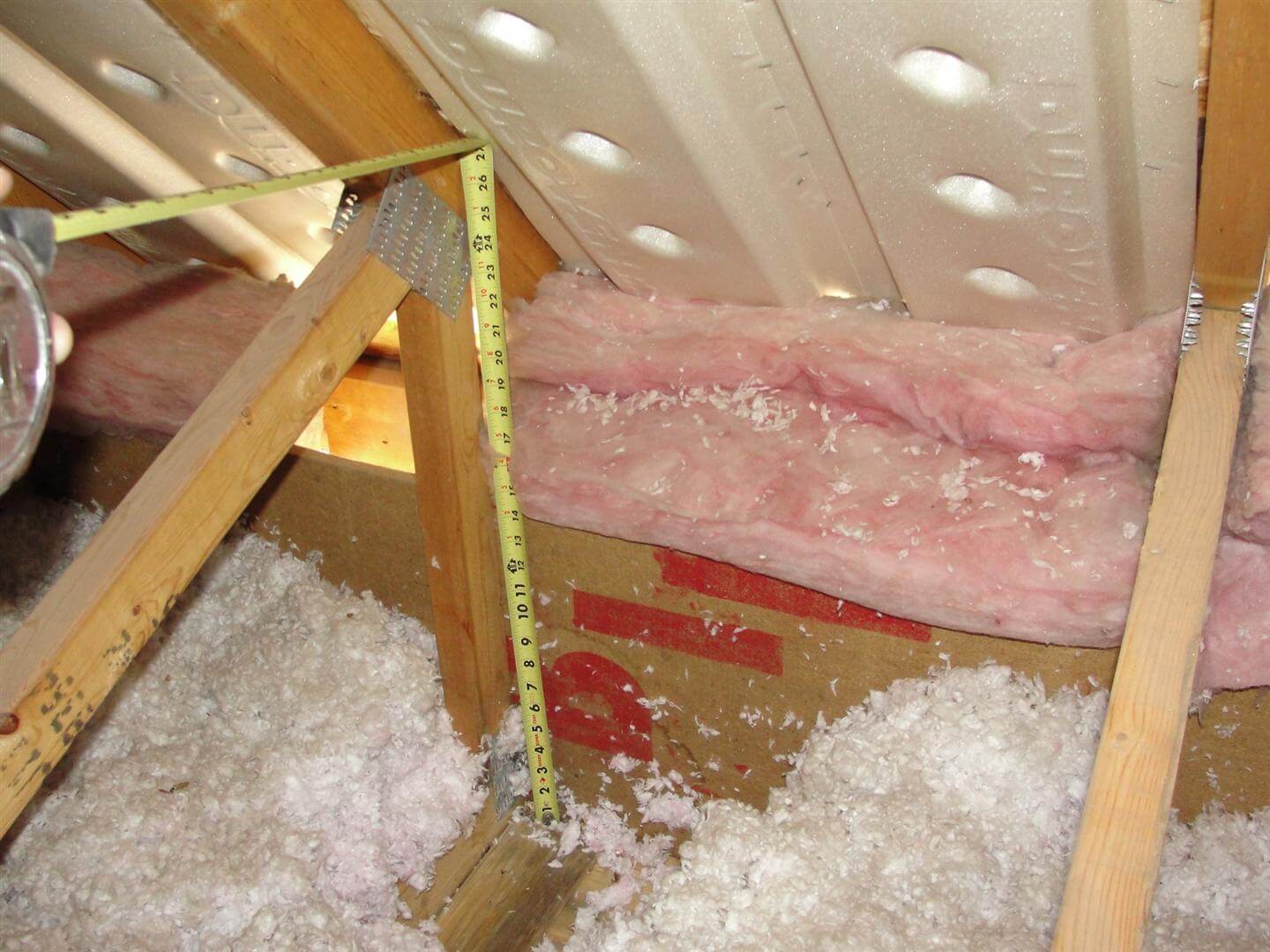
Today, homes are built with raised-heel trusses, or ‘energy trusses’.  This creates a bunch of extra room at the eaves just so the proper amount of insulation can be added.  I pulled the insulation away at the eave in the photo below to show this.

Energy Truss

A minimal amount of insulation at the eaves results in energy loss, which is unfortunate, but not a major concern.   Usually.  The time that this lack of insulation at the eaves starts to become a bigger concern is when the home has ice dams.  Insufficient insulation at the eaves is a common contributor to ice dams, and there’s no simple solution for this.

The best approach in these situations is to use an insulation with a higher R-value per inch – specifically, closed-cell spray foam insulation.  It’s not necessary to have the entire attic lid insulated with spray foam, but having spray-foam insulation installed at the eaves is a great way to help compensate for the lack of space at these locations.  The illustration below, provided by the Minnesota Department of Commerce, Division of Energy Resources, shows what this method looks like.

Foam insulation at eave


The only downside to having this type of insulation installed is that it’s more expensive than other types of insulation, and the work should be performed by an experienced spray-foam insulation installer.  It’s not a DIY project.

Reuben Saltzman, Structure Tech Home Inspections


Attic Fans Won’t Fix Ice Dams (or anything else)

January 15th, 2013 | 6 comments

Icicles hanging over the edges of roofs might look pretty, but once enough melted water gets trapped behind that ice, water can leak in to the house.  Minnesota saw a ridiculous amount of ice dams two and three winters ago, which prompted many homeowners to start looking for ways to prevent ice dams.

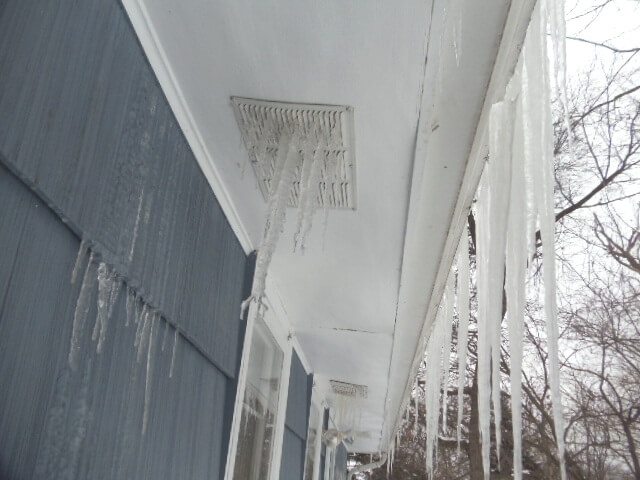
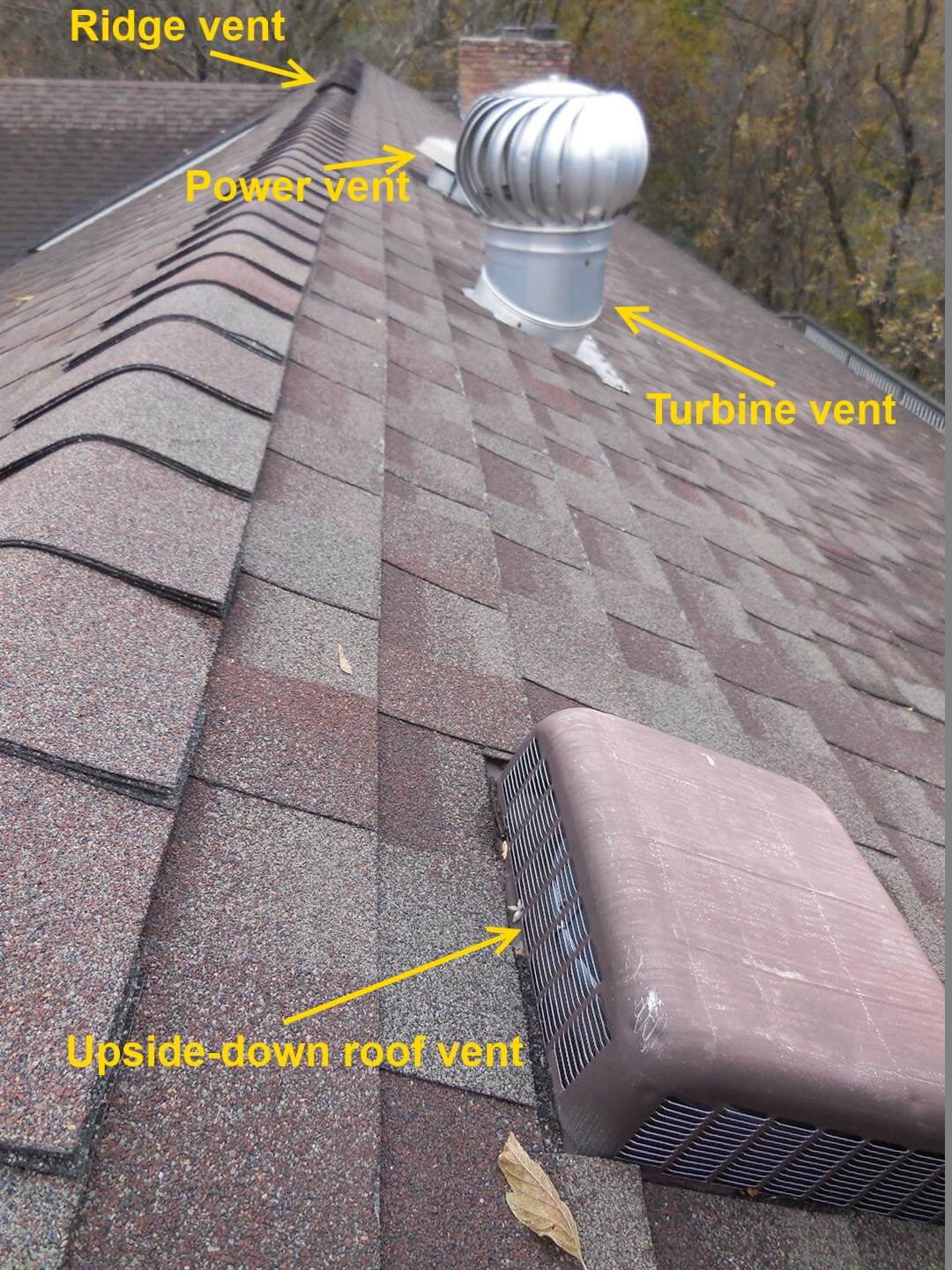
The two main driving factors behind ice dams are attic air leaks and insufficient insulation.  If those two are fixed, the potential for ice dams is quite minimal.  A third component to ice dams is attic ventilation.  Attic ventilation is required by code, but it’s not an ice dam elixir.  As long as attic air leaks are sealed and insulation is sufficient, only small amount of ventilation are needed to keep the attic space cold.

Unfortunately, lots of people claim that inadequate attic ventilation causes ice dams, which leads people to do all kinds of crazy stuff to get more air flowing in to their attic.

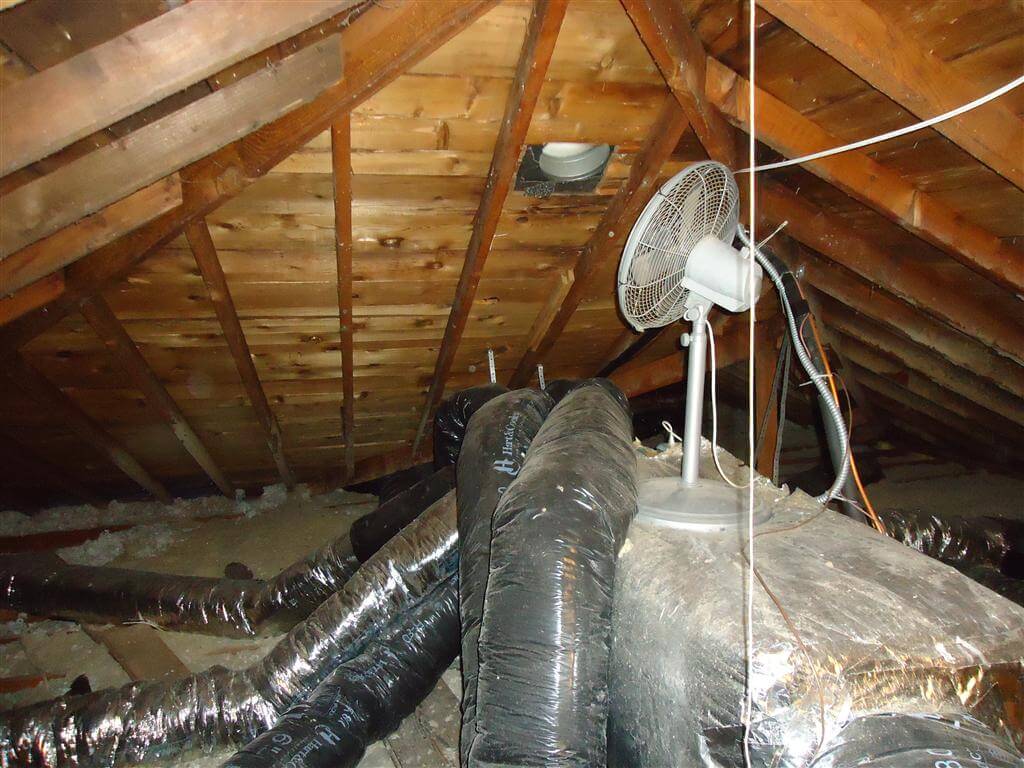
Attic Fan

While the photo above of a desk fan installed in someone’s attic is a little silly, the person who installed it obviously thought it was a good idea.  There are actually fans made specifically for attics.  Most need to be connected to a 120 volt power source, but there are also solar powered fans available, such as the one pictured below.  This one was sold at Costco for a while.

Solar Powered Attic Fan

My advice is to skip these fans entirely.  While attic fans will certainly suck air out of your attic, the problem is that this air needs to be replaced.  Where does the air come from?  Some of it will come from the soffit vents, and some will come from attic air leaks.  If you have problems with ice dams, a LOT of air will come from attic air leaks.  This means you’ll actually be sucking warm air IN to your attic.

If you have problems with ice dams, focus on fixing your air leaks and insufficient insulation.  Once your attic lid is perfectly air sealed and you have enough insulation, the main causes of ice dams will have already been corrected.  Don’t waste your money on an attic fan.  If you already have an attic fan installed, your best option would be to have it removed and have proper passive ventilation added if not already present.

What about using these fans during the summer?  Nope.  Check out any of the links below for more info on why you’re better off not using attic fans… ever.

Related links, mostly pertaining to attic fans running during the summer:

Reuben Saltzman, Structure Tech Home Inspections


Recessed Lights Are Evil

February 1st, 2011 | 86 comments

I love recessed lights, but even the best ones create a ridiculous amount of heat in attics, which can lead to ice dams.  Until I started performing infrared inspections in attics, I never quite grasped how much heat recessed lights contributed to attics, but now my eyes are wide open.  The main problem I find with recessed lights is that they’re not insulated well enough; on a recent home inspection in Maple Grove, I found a home with forty-six recessed lights sticking up in to the attic, along with some wicked ice dams on the roof.

A standard recessed light will stick up in to the attic about seven inches.  If an attic has fourteen inches of  loose fill fiberglass insulation, how much insulation does that leave on top of the recessed light?  Hang on, let me get my calculator…

At any rate, there’s far less insulation above recessed lights than anywhere else in the attic, and these are the areas that get the hottest, so they should really have more insulation than anywhere else in the attic.   Unfortunately, that never happens.  The combination of minimal insulation and hot light fixtures shows up clear as day using an infrared camera.

Recessed Light in attic with IR overlay

The images above show how much heat is leaking through the insulation above an IC rated, airtight recessed light with a 65-watt incandescent bulb.  IC rated means that it’s safe to have insulation directly in contact with the light, but it’s not synonymous with airtight.  You can usually tell if a recessed light is airtight just by looking inside it; if there are a bunch of holes inside the housing, it probably isn’t airtight.

Non-airtight recessed light

If you can see light pouring through on the attic side, it’s definitely not airtight.  All of these little holes in the housing are passageways for heated air to escape in to the attic; they’re called attic bypasses.

Non-airtight recessed light

Having said all this, I don’t think recessed lights are truly ‘evil’, but they sure can cause a lot of problems, and there seems to be very little understanding of this in the building trades.   Here’s what you can do to prevent problems:

If you plan to install recessed lights that are going to protrude in to your attic, make sure they’re airtight, IC-rated lights.  After the lights are installed, be sure to double down on the amount of insulation above the lights; you’re gonna need it.

If you already have airtight recessed lights in your home, you probably need way more insulation installed on top of them.  This is usually quite simple to do, but without an infrared camera, it might take a little time to locate all the lights.

If you already have non-airtight recessed lights sticking up in to your attic, don’t worry; there’s a fix for this.   Simply construct an airtight box out of rigid foam insulation, and ‘glue’ it together with spray foam.

Insulated Box

Now place this airtight box over the offending recessed light in your attic, and use a bunch more expanding foam to seal it up and make it completely airtight.   Not only will this prevent air leakage from around the light, but it will dramatically increase the insulation level above the light.  While the box pictured below is the ugliest box I’ve ever seen (I built it), it’s still very effective at preventing heat loss.

Insulated box over recessed light

If constructing and installing insulated boxes throughout your attic seems like too much work, you could always replace any standard incandescent light bulbs with compact fluorescent lights or LEDs; they produce far less heat, they’re easy to install, and you’ll start saving money on your electricity bills.

Reuben Saltzman, Structure Tech Home Inspections - EmailMaple Grove Home Inspections

Facebook Reuben's LinkedIn Page Follow StructureTech on Twitter ASHI Certified Home Inspector - Click To Verify Click to subscibe to Reuben's Blog